 09 Dec
Do you have a neglected tree stump in your yard? If so, you may be wondering whether it can grow back after grinding it down. While in most cases a tree will not grow back after stump grinding, it can if done incorrectly. Grinding is a highly effective stump removal technique that destroys the living tissue and root crown, which are essential for regeneration. At Southern Star Stump, we provide comprehensive services, including grinding and full removal, helping you reclaim your outdoor spaces. Let’s delve into this common question to help you make informed decisions.
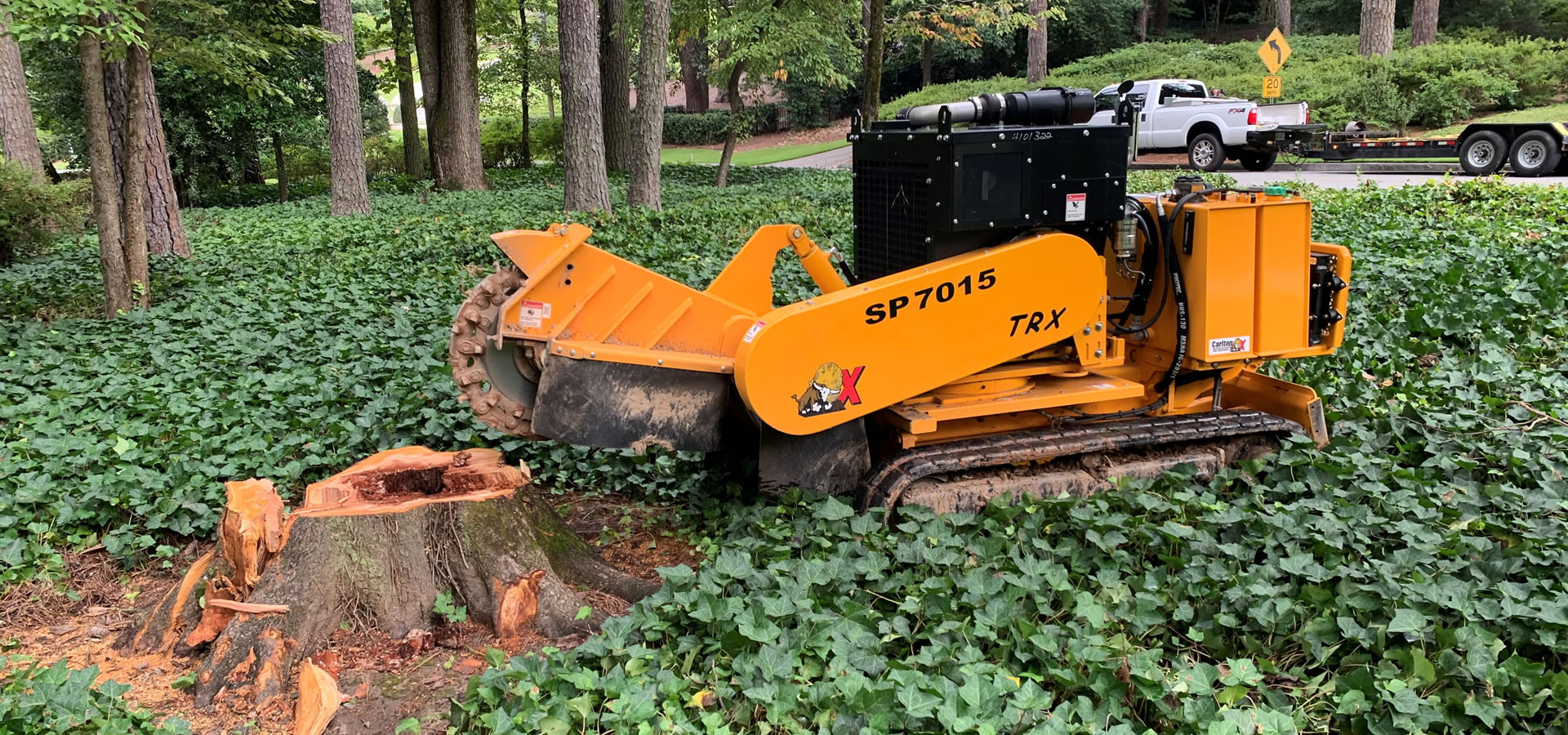
Stump grinding in Sandy Springs, GA works by physically shredding the stump down using specialized grinders several inches below the ground. This destroys the root crown, which is the critical area where the roots meet the trunk. Most dominant buds capable of producing new sprouts are found in this area. Grinding eliminates the tree’s natural ability to regenerate, keeping your outdoor spaces safe and aesthetically appealing.
Additionally, without the trunk and crown, the remaining roots have a finite amount of stored energy. Once this energy is depleted, the tree cannot sprout and support photosynthesis, causing it to eventually die and decompose. With this in mind, ensuring that the stump is ground at least 6-8 inches below the ground is crucial in preventing fresh growth.
When you ask a tree service provider, “Can a tree grow from a stump?” they’ll say that it can happen under certain conditions. If you can’t tell whether a stump will grow new sprouts after grinding, here are crucial factors to consider.
Some species, particularly certain deciduous hardwoods like maples, oaks, elms, willows, and poplars, have vigorous root systems and a higher natural tendency to sprout from the dominant buds in the root crown. On the other hand, other trees that are unlikely to grow sprouts after stump grinding include spruces and pines. If you detect a potentially hazardous tree on your property, identify its species to ensure you implement effective strategies to prevent fresh growth.
Younger, more vigorous trees typically have a better chance of sprouting than older, less robust ones. Healthy roots extend outward searching for water and vital nutrients to fuel new growth. This is often the case when dealing with healthy trees at their peak. With that said, regularly inspecting the grinding site is crucial to ensure sprouts don’t grow.
Another crucial factor that affects tree sprouting is the season. Trees cut during their dormant season are more likely to sprout than those cut during the active growing season, as they have more stored energy reserves. Most tree species are dormant in late fall to early spring, making it the perfect time to grind down an eyesore on your property. If your tree grows all year round, hire a tree care company to inspect and devise a tailored stump removal plan.
Besides tree-related factors, the grinding technique is crucial in preventing regrowth. The general rule of thumb is that stump grinding should reach a depth of 6-8 inches, but it can change depending on certain factors. If you don’t reach the appropriate depth, then the chances for regrowth are high. A licensed technician can assess the stump, grind it, and distribute the byproduct around to reduce the chances of new growth.
By understanding these factors, you can better predict the likelihood of sprouting and choose appropriate measures to prevent or encourage growth. Contact us at Southern Star Stump to book an appointment with our experts and enjoy quality stump removal services at competitive rates.

.jpg)